

Categories
Best Places to Live, Coastal Living, Commuting & Transportation, Connecticut Real Estate, Family-Friendly LivingPublished September 30, 2026
Main Street Season: Why September Is the Perfect Month to Rediscover Connecticut’s Small Towns

Main Street Season: Why September Is the Perfect Month to Rediscover Connecticut’s Small Towns
There’s a version of Connecticut you can’t fully appreciate at 45 miles per hour.
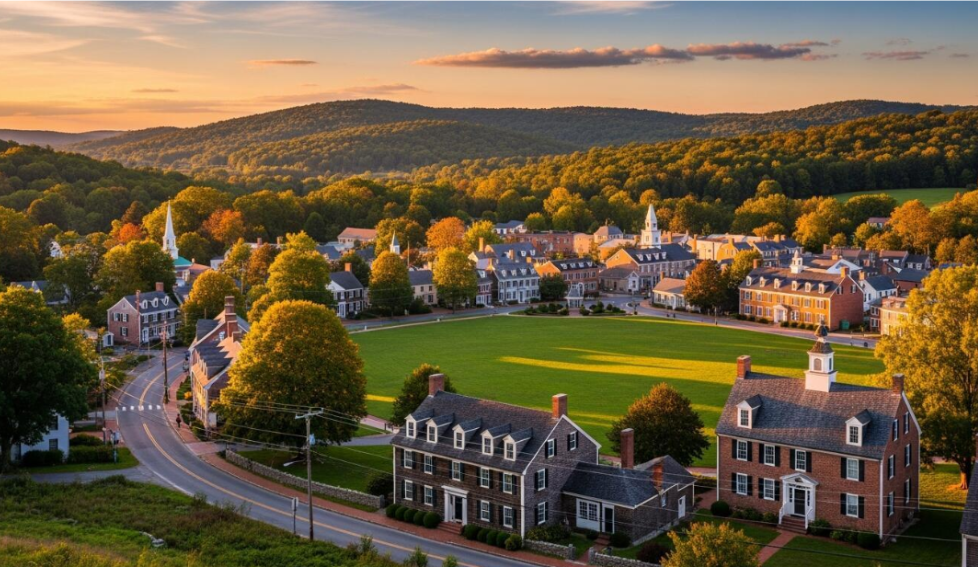
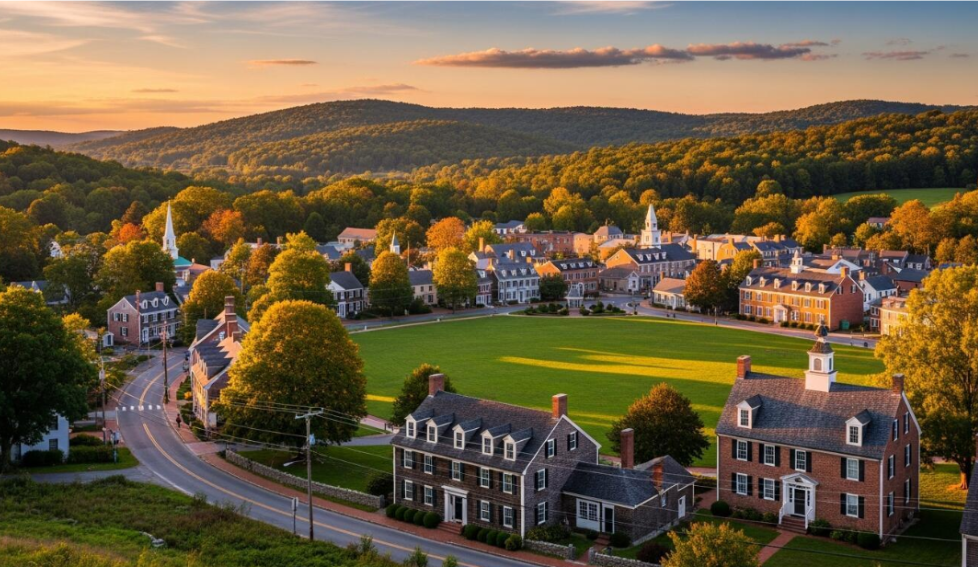
You see glimpses of it through the windshield a white-steepled church, an old brick storefront, a town green shaded by mature trees, a handwritten bakery sign, or a café with tables spilling onto the sidewalk.
Then the traffic light turns green, and you keep going.
September is a good month to stop.
Not because Connecticut has suddenly transformed into the brilliant reds and oranges of peak fall. In fact, that’s part of the appeal.
September sits in the quieter space between summer and full autumn, when afternoons can still be warm, mornings become noticeably cooler, and walking around town feels inviting again.
It’s what we might call Main Street season.
And if you’re searching for things to do in Connecticut in September, consider skipping the complicated itinerary.
Pick a town you’ve driven through a hundred times.
Park the car.
And this time, get out.
Connecticut’s Main Streets Tell Stories
Connecticut’s town centers weren’t designed to be identical.
That’s what makes them interesting.
In one community, Main Street may curve past centuries-old homes and a traditional town green.
Somewhere else, former factory buildings have found new purposes.
Another downtown may revolve around restaurants and cafés, while the next has bookstores, boutiques, galleries, and businesses that have served generations of local families.
Architecture tells part of the story.
Look up and you’ll notice old brickwork, unusual windows, decorative trim, church steeples, stone walls, historic signs, and buildings that reveal how a community developed.
But Main Street isn’t a museum.
It’s still being written.
A new coffee shop opens inside an old building. A local entrepreneur takes over a storefront. Outdoor tables appear along the sidewalk. A historic property finds a modern use.
That combination of old and new gives Connecticut Main Streets their personality.
I can also reformat the entire blog this way from beginning to end so you can copy and paste it directly without fixing the spacing yourself.
give me the whole blog please
Absolutely! Here is the entire blog reformatted with plenty of spacing between paragraphs so it should be much cleaner when you copy and paste it into your website.
Main Street Season: Why September Is the Perfect Month to Rediscover Connecticut’s Small Towns
Category: Lifestyle & Community / Connecticut Living
There’s a version of Connecticut you can’t fully appreciate at 45 miles per hour.
You see glimpses of it through the windshield a white-steepled church, an old brick storefront, a town green shaded by mature trees, a handwritten bakery sign, or a café with tables spilling onto the sidewalk.
Then the traffic light turns green, and you keep going.
September is a good month to stop.
Not because Connecticut has suddenly transformed into the brilliant reds and oranges of peak fall. In fact, that’s part of the appeal.
September sits in the quieter space between summer and full autumn, when afternoons can still be warm, mornings become noticeably cooler, and walking around town feels inviting again.
It’s what we might call Main Street season.
And if you’re searching for things to do in Connecticut in September, consider skipping the complicated itinerary.
Pick a town you’ve driven through a hundred times.
Park the car.
And this time, get out.
Connecticut’s Main Streets Tell Stories
Connecticut’s town centers weren’t designed to be identical.
That’s what makes them interesting.
In one community, Main Street may curve past centuries-old homes and a traditional town green.
Somewhere else, former factory buildings have found new purposes.
Another downtown may revolve around restaurants and cafés, while the next has bookstores, boutiques, galleries, and businesses that have served generations of local families.
Architecture tells part of the story.
Look up and you’ll notice old brickwork, unusual windows, decorative trim, church steeples, stone walls, historic signs, and buildings that reveal how a community developed.
But Main Street isn’t a museum.
It’s still being written.
A new coffee shop opens inside an old building. A local entrepreneur takes over a storefront. Outdoor tables appear along the sidewalk. A historic property finds a modern use.
That combination of old and new gives Connecticut Main Streets their personality.
Start With Coffee, Not a Checklist
Here’s a better way to explore a Connecticut town:
Don’t begin with a list of attractions.
Begin with coffee.
Find an independent café or bakery, order something good, and sit for a few minutes.
Watch the morning happen.
Who walks in?
Where are people heading?
What businesses are nearby?
What catches your eye through the window?
Independent coffee shops and bakeries often function as informal neighborhood gathering places.
They’re where someone works on a laptop, friends meet before errands, parents stop after school drop-off, and regular customers are greeted by name.
You learn something about a community simply by spending 20 minutes inside one.
And if there’s a fresh pastry involved, consider that research.
Find the Bookstore You Didn’t Know Was There
One of the pleasures of exploring Connecticut small towns is discovering businesses you’d never find by speeding through.
Independent bookstores are a perfect example.
Walk inside without looking for anything in particular.
Browse the staff recommendations.
Pick up a local history book.
Find something for the kids.
Ask the person behind the counter what they’ve been reading.
Then keep walking.
Maybe the next storefront is a boutique carrying work from local makers.
Maybe it’s an antique shop, gallery, specialty food store, or family-owned business that’s been there for decades.
Online shopping may be convenient, but it doesn’t give you the pleasure of discovering something you weren’t searching for.
Main Street does.
Town Greens Are Connecticut’s Living Rooms
If Main Street is a community’s hallway, the town green might be its living room.
Connecticut has a long tradition of greens and central gathering spaces.
Their original purposes may have changed over centuries, but many still provide a visual and social center for their communities.
On any given September weekend, a town green might host a farmers market, festival, concert, craft event, community gathering—or nothing at all.
And “nothing at all” can be pretty nice.
Find a bench.
Walk beneath the trees.
Look at the buildings surrounding the green.
Notice how the town fits together.
These spaces remind us that community isn’t only about houses and streets.
It’s also about the places where people naturally cross paths.
September Gives Outdoor Dining an Encore
Don’t pack away patio season just yet.
September can offer some of the most comfortable outdoor dining of the year in Connecticut.
The intense summer heat begins to fade, but many afternoons and early evenings can still be pleasant enough to enjoy a meal outside.
Find a sidewalk table.
Order lunch somewhere local.
Stay for another cup of coffee.
If the evening gets cooler, that’s part of the experience.
There’s something distinctly New England about beginning dinner in late-summer warmth and reaching for a light jacket before dessert.
And when you dine locally, you’re doing more than enjoying the weather.
You’re supporting the restaurants and independent businesses that help give a downtown its identity.
Look Up Connecticut’s Architecture Is Trying to Tell You Something
When we walk through a familiar town, we tend to look straight ahead.
Try looking up instead.
Many Connecticut communities contain layers of architectural history hiding in plain sight.
Colonial-era structures, Federal-style homes, Victorian details, old mills, converted industrial buildings, traditional New England churches, historic commercial blocks, and 20th-century storefronts can sometimes exist within a relatively short walk.
You don’t need to be an architectural historian to appreciate them.
Ask simple questions.
Why is this building here?
What might it have been originally?
Why does this street look different from the next one?
How has the town grown around its oldest structures?
Architecture turns an ordinary walk into a scavenger hunt through time.
It’s also one reason the best small towns in Connecticut rarely feel interchangeable.
Their buildings tell different stories.
Follow Main Street Into the Side Streets
The main road introduces you to a town.
The side streets often reveal how it lives.
Turn a corner and the storefronts may quickly give way to residential streets lined with porches, mature trees, stone walls, gardens, historic homes, and architecture from different periods.
This is where a casual day trip quietly becomes something more interesting.
You begin understanding the relationship between the downtown and the neighborhoods surrounding it.
Can residents walk to coffee?
Is the town green nearby?
Where do people gather?
What does the neighborhood feel like at street level?
For anyone curious about living in Connecticut, these details can reveal far more about a community than statistics alone.
A town isn’t just a ZIP code.
It’s a rhythm.
Make the Drive Between Towns Part of the Day
One advantage of exploring Connecticut is that you rarely need to stop at just one community.
A scenic road can connect several towns, turning a Saturday into an easy Connecticut day trip.
Pick one destination for breakfast.
Another for lunch.
Stop at a farm stand between them.
Pull over at a scenic overlook.
Explore a town green.
Take the road you’ve never taken simply because you have time.
Some of Connecticut’s most memorable scenery isn’t found at a formal attraction.
It’s along the way old stone walls bordering fields, historic homes set back from the road, barns, rivers, wooded hills, and village centers that appear almost unexpectedly.
In September, the landscape may still be predominantly green, with only the earliest hints of autumn beginning to appear.
You get the atmosphere of changing seasons without needing to chase peak foliage.
Let a Local Market Decide What’s for Dinner
September is also a wonderful month to combine downtown exploration with a local farmers market.
Late-summer produce may still be available while early autumn flavors begin arriving.
Instead of making a shopping list, reverse the process.
See what’s available first.
Then decide what’s for dinner.
Pick up something from a local baker.
Buy flowers for the table.
Try a product from a Connecticut maker you’ve never heard of.
Ask a farmer what’s particularly good that week.
Markets give communities another place to gather while connecting shoppers directly with the people producing what they buy.
They also make an excellent anchor for a spontaneous Saturday.
Festivals Show You a Town When Everyone Comes Outside
Want to understand the personality of a community?
Visit when the community is celebrating something.
September often brings local fairs, arts events, markets, food celebrations, concerts, and community festivals across Connecticut.
These events can turn familiar downtowns into gathering places filled with neighbors, local vendors, music, food, and traditions.
But don’t only attend the event.
Explore the town around it.
Arrive early and have breakfast nearby.
Walk Main Street before the festivities begin.
Visit a local shop.
Stay afterward for dinner.
That way, the festival becomes your introduction to the community rather than the entire experience.
Don’t Only Visit the Famous Towns
Search for the best small towns in Connecticut, and you’ll quickly encounter familiar names.
They’re popular for good reason.
But Connecticut becomes much more interesting when you stop treating every outing like a “best of” competition.
The town closest to you may have a bakery you’ve never tried.
The community you drive through on your commute may have an interesting historic district two streets away.
A town you know only from a highway exit may have a surprisingly walkable center.
Exploration doesn’t require finding Connecticut’s most photographed street.
Sometimes it means becoming curious about the places already around you.
Shopping Local Changes the Experience
There’s an important difference between visiting a town and participating in it.
Buying coffee from the local café.
Having lunch at an independently owned restaurant.
Purchasing a book from the neighborhood bookstore.
Browsing a local boutique.
Shopping at a farmers market.
These small choices help support the businesses that make Connecticut communities distinct.
Without them, Main Streets become less interesting.
Local businesses create gathering places, jobs, traditions, and personality.
They’re often the businesses sponsoring youth teams, donating to community events, remembering customers’ names, and taking chances on old storefronts.
Supporting them isn’t just a feel-good slogan.
It’s part of keeping town centers alive.
What Main Street Can Tell You About Living Somewhere
There’s also a reason this kind of exploration matters beyond weekend entertainment.
If you’ve ever wondered what it would actually be like to live in a particular Connecticut community, spend time downtown.
Not five minutes.
An afternoon.
Walk around.
Have lunch.
Visit a park.
Drive through surrounding neighborhoods.
See where people gather.
Notice whether the town feels energetic, quiet, historic, modern, rural, walkable, spread out or some combination of all of them.
Real estate listings can tell you how many bedrooms a house has.
They can’t fully tell you what Saturday morning feels like there.
That’s something you experience.
A Simple Connecticut Main Street Day
Want to try it this weekend?
Keep the plan intentionally simple.
Choose a Connecticut town you’ve never properly explored.
Arrive in the morning and find a local coffee shop.
Walk Main Street without rushing.
Browse a bookstore, boutique, antique shop, or local business.
Spend a little time around the town green or a nearby park.
Have lunch outside if the weather cooperates.
Check for a local market, festival, or community event.
Then take a scenic road toward another nearby town before heading home.
That’s your itinerary.
No complicated reservations.
No race against the clock.
No pressure to see everything.
Just curiosity.
September Is Main Street Season
October will get plenty of attention.
The leaves will change dramatically.
Orchards will fill.
Scenic roads will become destinations.
Everyone will suddenly have strong opinions about cider doughnuts.
September is quieter.
And maybe that’s why it works so well.
The sidewalks are comfortable again.
Outdoor tables are still open.
Markets bridge summer and fall.
Downtowns feel active without necessarily feeling overwhelmed.
The trees are beginning to hint at what’s coming, but they’re not putting on the full show yet.
September gives you room to notice the town itself.
Final Thoughts: Park the Car and See What You’ve Been Missing
Connecticut doesn’t always reveal its best qualities from the main road.
Sometimes you have to park.
Walk past the storefronts.
Order the coffee.
Browse the books.
Sit on the green.
Notice the old houses.
Talk to the shop owner.
Take the side street.
Stay for lunch.
Then choose the scenic road home.
That’s the beauty of exploring Connecticut in September.
You don’t need to wait for peak foliage or travel across the state looking for a famous attraction.
There are interesting communities hiding in plain sight and many of them have been there all along, waiting for you to stop driving through and start looking around.
So this September, make it Main Street season.
Pick a town.
Park the car.
And rediscover Connecticut at walking speed.

Sandie Terenzi
CEO, Broker Associate | Sandie Terenzi | Keller Williams Legacy Partners | PLACE
or another way